
Am I a Candidate for Dental Implants? A Winter Park Dentist Explains
The question I hear most often in my Winter Park office isn't "how much do implants cost?" or "how long does it take?" It's this one: "Am I even a candidate?"
Most patients who ask this have already been told no somewhere else. Maybe a previous dentist said they didn't have enough bone. Maybe they read online that smokers can't get implants, or that diabetes disqualifies them. They come in expecting me to confirm the bad news.
More often than not, I don't.
After completing my ICOI Fellowship training and placing implants for over a decade, I've learned that candidacy isn't binary. Modern technology—particularly 3D imaging and guided surgery—has expanded who can successfully receive implants. Conditions that were once dealbreakers are now manageable factors we plan around.
The Three Things I'm Evaluating
When you sit in my chair for an implant consultation, I'm assessing three things: your bone, your health, and your commitment. Everything else is secondary.
Bone Quality and Quantity
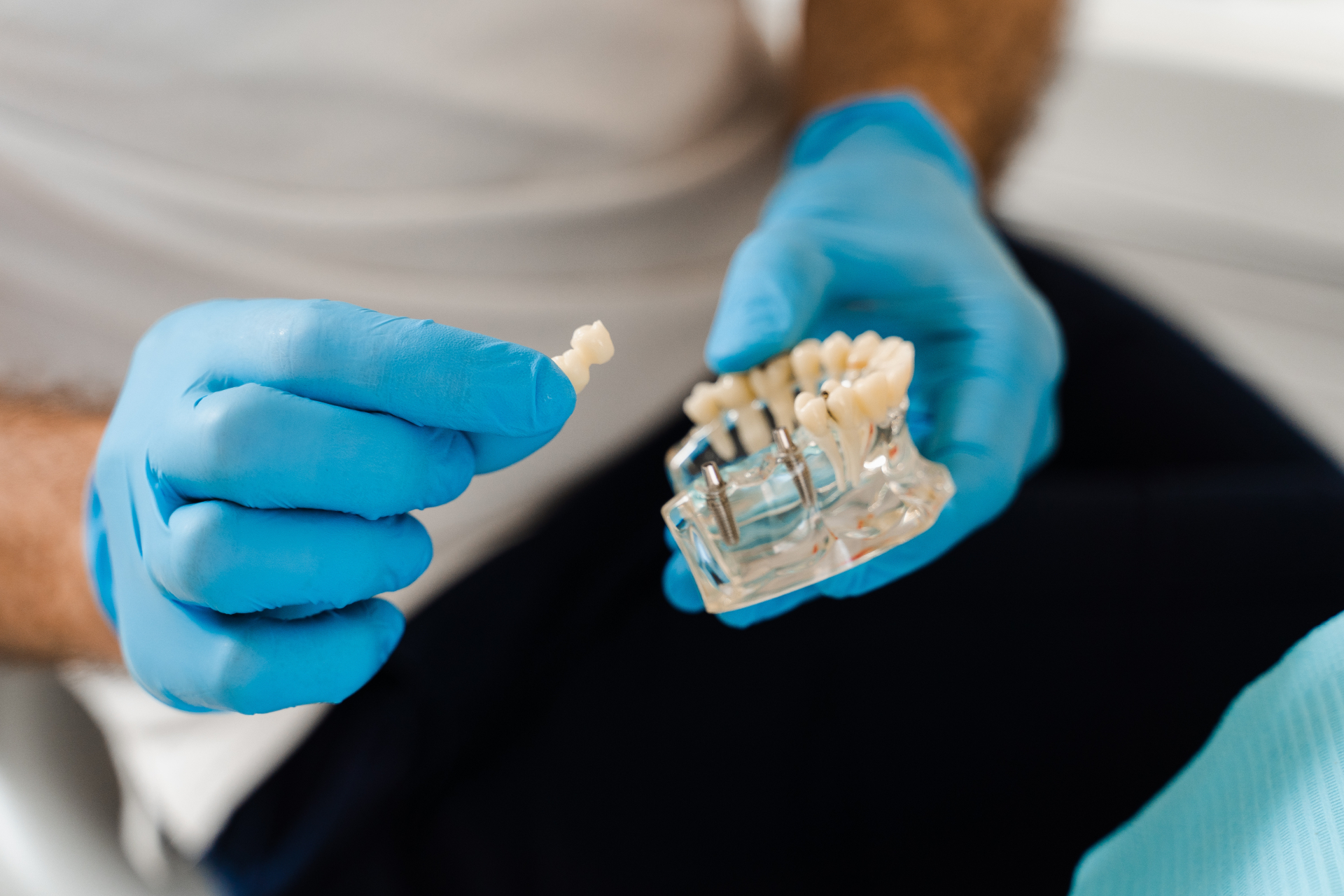
Dental implants are essentially titanium roots. They need to anchor into your jawbone and fuse with it over several months—a process called osseointegration. For this to work, you need sufficient bone volume and density.
Here's what most patients don't realize: bone loss after tooth extraction is normal. It happens to everyone. The longer a tooth has been missing, the more the bone in that area has resorbed. This doesn't automatically disqualify you.
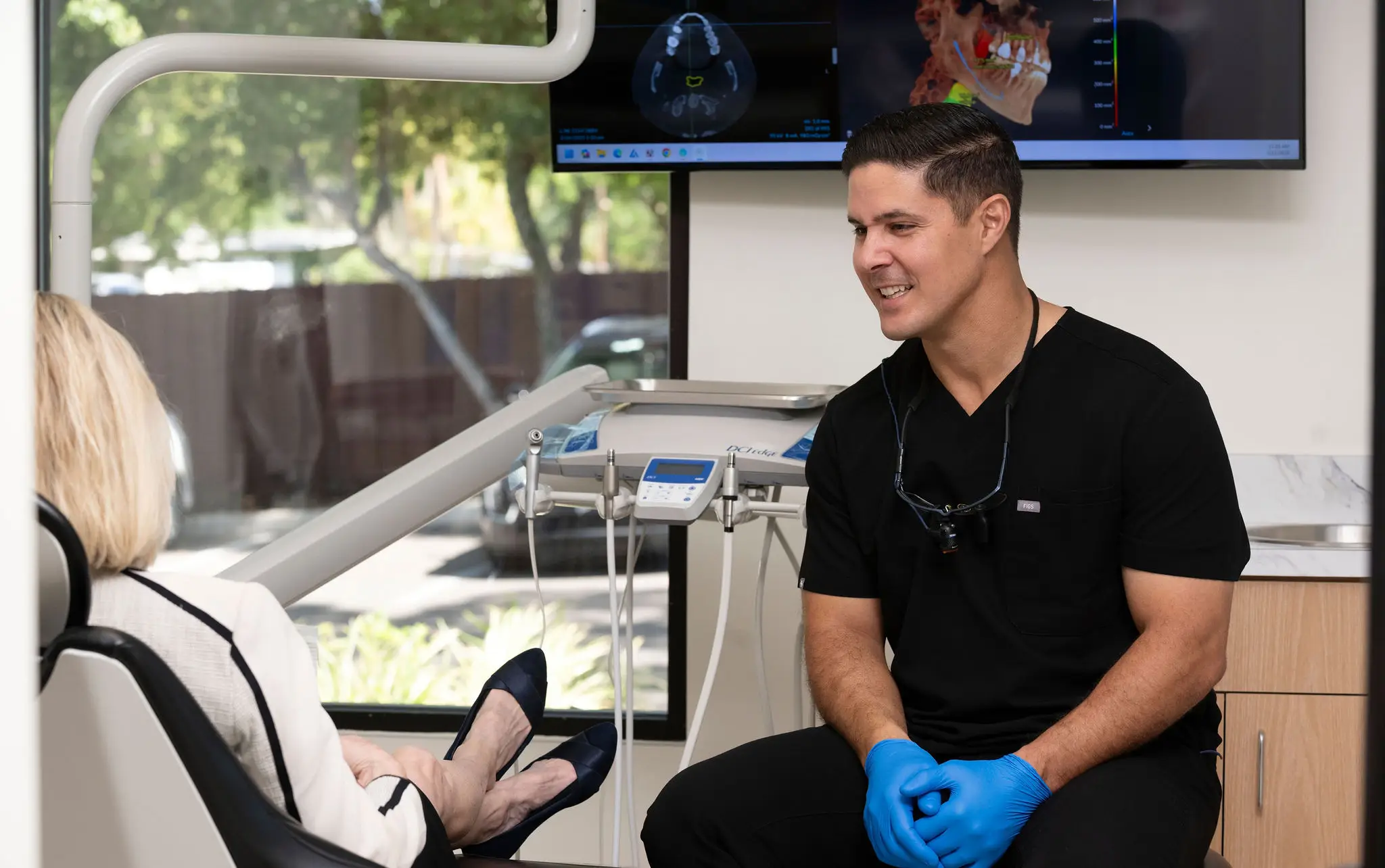
At Premier Dental, I use CBCT imaging—a 3D cone beam scan—to see exactly what we're working with. Unlike a standard dental X-ray, CBCT shows me the width, height, and density of your bone in three dimensions. I can measure down to the millimeter. This precision means no guessing and no surprises during surgery.
Overall Health Status
Certain health conditions affect healing. I need to know about them—not to exclude you, but to plan appropriately.
- Diabetes: Uncontrolled diabetes slows healing and increases infection risk. Controlled diabetes is generally not a problem.
- Osteoporosis: Affects bone density throughout the body. Doesn't disqualify you, but factors into planning.
- Blood thinners: Require coordination with your physician. Manageable.
- Smoking: Significantly increases implant failure rates. We discuss reduction before and after surgery.
- Autoimmune conditions: Can affect healing—we work around them.
Having a health condition doesn't mean automatic rejection. It means we have a conversation about how to proceed safely.
Commitment to the Process
Implants aren't a single appointment. The full process typically takes three to six months, sometimes longer if bone grafting is needed. You'll need to attend follow-up appointments, be patient during the healing phase, and maintain good oral hygiene afterward.
What About Bone Loss? The Grafting Question
Bone grafting is a routine procedure that rebuilds the foundation for implants. I perform bone grafts in my office—you don't need to be referred to an oral surgeon or hospital. Options include:
- Socket preservation: Bone graft placed at the time of extraction to maintain bone volume.
- Ridge augmentation: Rebuilds bone that has already been lost.
- Sinus lift: Creates depth needed for upper back implants when the sinus limits available bone height.
The ability to handle bone grafting in-house is one reason I can say yes to patients who've been told no elsewhere.
Implants vs. Dentures vs. Bridges: A Practical Comparison
- Dentures: Removable, least expensive, no surgery required. Downside: can slip, don't prevent bone loss. CLimits the type of food you can eat.
- Bridges: Fixed, natural feel. Downside: adjacent teeth must be ground down to support the bridge; bone loss in the gap continues.
- Implants: Replace the root and the crown. Prevent bone loss. Function like a natural tooth. Nothing is removable. Adjacent teeth aren't touched. No restrictions on the type of food you can eat.
When patients ask what I would choose for my own mouth, the answer is always implants.
What Happens at Your First Consultation
We'll start with the CBCT scan—about 30 seconds, no special preparation. I'll review the images with you on screen, walk through your health history, and outline a treatment plan if you're a candidate. If implants aren't the right fit, I'll explain why and discuss alternatives.
The consultation is free. There's no obligation. My goal is to answer the question you came in with: am I a candidate?
The Bottom Line
Most people who think they can't get dental implants actually can. Modern 3D imaging shows us precisely what's possible. Bone grafting handles cases that would have been rejected a decade ago. Health conditions that seem like barriers are usually factors we plan around, not reasons to say no.
The only way to know for certain is to have your specific situation evaluated.
Schedule Your Free Consultation
flexbook.me/pdwp · (407) 660-8606
Dr. Alejandro Gonzalez is a fellowship-trained implant dentist at Premier Dental of Winter Park. He holds a DMD from Temple University, completed sedation training at USC, and is an ICOI Fellow. He's been placing dental implants in the Central Florida community for over 15 years.
Related Posts
Best Dental Implants in Winter Park, FL: Top-Rated Implant Dentists Near Winter Park & Maitland (2025 Guide)
Smile Makeover & Porcelain Veneers in Winter Park, FL: The Complete Guide for Winter Park & Maitland Patients
Full Mouth Reconstruction in Winter Park, FL: A Complete Guide to Restoring Your Smile (Serving Maitland & Orlando)
Ready to Experience Dental Care Done Differently?
Your smile deserves exceptional care, cutting-edge technology, and a team that truly cares. Book your visit today!